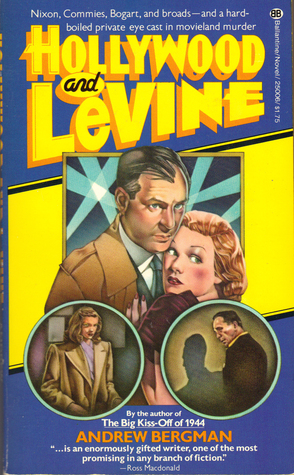
In a review of Nabokov's THE ORIGINAL OF LAURA in the New York Review of Books, John Lanchester makes the interesting observation that some writers have readers and some have fans. I am not sure I completely understand the difference. The origins of the idea is with Alan Bennett: Evelyn Waugh had readers while Anthony Powell had fans, as did Henry Green. Eliot had readers; James Joyce fans. Gertrude Stein, fans. Edith Wharton, readers. What I think this means is the intensity of attachment to a writer makes you either a reader (admiring, but more distant) of his work or a fan (intensity high-you feel drawn to them). Now as I am considering this, I realize that the intensity of attraction can fade. I was a huge fan of a number of writers years ago but haven't read their latest works with as much fervor. This would include Robert Parker, Ruth Rendell, P.D. James, John Irving, Richard Russo, Russell Banks and Anne Tyler. I have aged but so have they. We just don't like getting into bed together as much. (for reading, of course).
Who are you a fan of as opposed to a reader? What crime fiction writers provoke the most intensity of feeling?
Click icon for more book review blogs@Barrie Summy
Landscape with Fragmented Figures, Jeff Vande Zande (Bottom Dog Press, 2008)
It is hard to imagine this book taking place in a locale other than Michigan. If soldiers returning from war can be said to suffering post-traumatic stress disorders, many people in Michigan suffer similarly. Too many years of economic downturn takes a toll. An urban scholar doing a study of cities that have badly floundered, failed to find anyone with much optimism about the future of Detroit. This book captures that pessimism and angst.
Ray Casper is an artist, teaching at a small college in Bay City, Michigan. He's done some good work, is known as an inspirational teacher, has a nice relationship with his girlfriend, Diane. Suddenly, things begin to go awry. Diane, also an artist, leaves him. He loses his will to paint and desire to teach. He is unable to find solace with colleagues or friends. He is adrift even before his father dies, leaving many unresolved issues. His brother, a ne-er do well, Ray has never come to terms with, comes to live with him. Things continue their downward spiral as Ray comes to resemble his brother, Sammy, more and more.
This was a difficult book to read and yet I never put it down. Michigan is no longer hospitable to a diverse group of people: the blue-collar ,Sammy; the artist, Ray; the student, Billy, who finds little support for finding a way to make a living or getting an education. The writing is fluid, the story poignant, but the book's most important strength is its clear-sighted and unabashed presentation of truth. That truth also examines the nature of art and the artist.
There are no heroes in this book. Just real people trying to find some joy in life, trying to find a reason to go on.
My four favorite books this year were written by writers from Michigan: Michael Zadoorian's THE LEISURE SEEKERS, Bonnie Jo Campbell's AMERICAN SALVAGE, Megan Abbott's BURY ME DEEP and Jeffrey Vande Zande's LANDSCAPE WITH FRAGMENTED FIGURES. I highly recommend them. All four of these books offer a bleak landscape (Megan's in the 1930s, the rest contemporary). One with fragmented figures, perhaps. How could it be otherwise?
Interview with Jeff Vande Zande
1)The economic crisis, especially in Michigan, plays a large role in this book, almost functioning as a character in its ability to shape and destroy lives. Was this your intention from the start or did it rise up as the book took shape?
I started the book four years ago . . . when things weren't quite as dire as now, but the writing was on the wall. I'd been thinking about the future of Michigan, but also the future of the United States (with Michigan serving as a microcosm) for some time. Still, I didn't know I was going to write this particular book. The book started as a sentence. I was lying in bed, listening to a storm receding over Bay City, and the opening line of the book came to me. I didn't know anything about this guy lying in bed, but I do remember that it was sometime after midnight, and I just had to get out of bed, go to my study, and jot down that first line. When I read the line in the morning, it still rang true to me, and I went from there. I think that opening line was like a zipper that opened up things about art, the economy, and family ties that had been on both my conscious and my sub-conscious for some time. It's so funny though . . . how little I knew about anything in Ray's life. I didn't know about Diane or Sammy . . . certainly not the enigmatic Kleminger. I just wrote and discovered. As I wrote, and set the story in Bay City, Michigan's economy -- the Midwest's economy -- simply had to become a moving force in all of the characters' lives.)
2) Along those lines, would this have been a very different book if you lived in North Carolina or Texas?
Yes, I think it would. Like any state, Michigan is a place unto itself. Its geography, demographics, juxtaposition of city and wilderness . . . and the Great Lakes. The Mackinac Bridge. The Upper Peninsula and its mythologies! It's a unique place. As, I imagine, any state is. That's not to say, however, this is a book for Michigan readers exclusively. I think most people could connect to what both Ray and Sammy are going through.)
3) What writers have been most influential in your growth as a writer?
Hemingway. Carver. Calvino. Jim Daniels. Bonnie Jo Campbell . . . and I would say my writing buddies, Matt Bell and Josh Maday) Who are you reading now? (right now, I'm reading my students. Man, they are turning in papers left and right. However, I just finished Ken Meisel's powerful collection of poems, Beautiful Rust . . . poems about Detroit. I also read that Anis Shivani has a collection of short stories out that I intend to buy.
4) Tell us about your other books.
I have another novel, Into the Desperate Country (March Street Press), a collection of poems, Poems New, Used, and Rebuilds (March Street Press), and a collection of short stories, Emergency Stopping and Other Stories (Bottom Dog Press).
5) What's next?
In 2010, Whistling Shade Press will release my novella and short stories collection entitled, Threatened Species and Other Stories.
Jeff Vande Zande lives in Michigan's Lower Peninsula, in Midland with his wife, son, and daughter, where he teaches at Delta College.
I may have some links where no story appears; I may have missed a few. I will make accommodations over the day. Five or so appear on Powder Burn Flash. There are also three at DO SOME DAMAGE, which may come up over the course of the day.
Here they are. Thanks to all for contributing your time and heart.
Report to the Loss Prevention Manager, Tim O’Reilly,
Walmart Store #1679 regarding the incident of March 22, 2009
(from Loss Prevention Officer, John Rutledge)
I was the new guy, understand, the new guy. Not some ten-year veteran who knew the rulebook like the bible. But at approximately 4:20 PM on March 22, I spotted a large man reclining in the husband chair just off ladies’ wear. Thinking he must be homeless or sleeping it off, I’d begun to radio for advice when a screech interrupted me.
“Hey, Daddy, whadya think.” A bitty girl, maybe 16, with reddish corkscrews dashed up to the dozing guy, her twiggish legs skidding to an unsteady stop. She twirled around like a bauble on a Christmas tree. “I’m gonna wear this to the party tonight? Whadya think?”
Her father’s eyes, bloodshot and teary, fluttered open. “Real nice, baby. Lookin’ good!”
Daddy must have been half-asleep ‘cause if he wasn’t, he’d have seen his daughter modeling a pink skirt, maybe ten inches long, showing off parts of her better kept covered. Slack-jawed, I closed my mouth and heard another girl, hidden by a clothes rack, giggling. Bitty held some dangling glitzy earrings up and her pal broke into laughter, saying, “Girl, you look like an Eight Mile Road ho.”
“Don’t neither.” Bitty glanced at her father with a worried look. “Go ahead back to sleep now, Daddy. You looking kinda peaky.” Bitty ran the back of her dewy hand down his cheek and he quivered like a stroked rabbit. Parts of me quivered too.
The girls ducked out of sight and the father’s eyes closed.
I thought again about giving him a jab or a tongue lashing, sending him along. I was pretty sure the Store didn’t approve of people sleeping in their chairs, but I hadn’t been a Loss Prevention Officer at Walmart’s long enough to know the exact thing to do. Maybe Daddy was about to dole out money to outfit Bitty in those dream clothes. Suede jacket, shoes shined. This was my thinking around about then.
But my leaning toward sending him along grew ten-fold as the sleeping bear’s snore climbed the decibel chart. People were tittering.
Before I could decide, the two girls popped up again an aisle away. Now Bitty was wearing a silver tank top. Glittery type of thing. Eight inches of midriff pooched out just enough to make a man sweat. Was she headed for the door? I couldn’t tell so I swung over an aisle, managing to lay a hand on Bitty’s chain necklaced throat, (tag still on it) swooping her off the floor. Those twiggy legs flapped wildly like someone just hanged and I could feel her pulse beating hard beneath my hand. Something about the whole thing sucked the breath right out of me.
Gasps from Walmart shoppers in the area woke up that sleeping bear and he came after me. In his rush, Daddy knocked over the husband chair, a lady exiting the sportswear department, and a huge rack of clearance items. His snore became a roar as the nervous crowd cleared a path. He was galumphing through the aisles of merchandise at an awful pace, the sound of Santa Claus is Coming to Town, blaring out of the speakers. I was kinda frightened, him having forty pounds on me. He was wild-eyed all right.
Startled, I dropped Bitty. Feet on the ground, she promptly headed for the door. I couldn’t believe she was gonna steal stuff with me ten steps behind. Was Daddy in on it? He was closing in on me, but my duty lay in protecting Walmart assets, so summoning up my courage I took off again, following Bitty out the door and into the parking lot.
Damn, she could run. Thinking fast, I grabbed a shopping cart, shoving it hard in her direction. Bitty went down like a duck over water in hunting season. A second later, a huge arm encircled my neck, nearly squeezing the life out of me. Daddy didn’t let go till one of those security guys who circle the parking lot in a jeep (to show Walmart cares) pulled up. Before I could catch my breath, Bitty sashayed off wearing those stolen clothes, old Daddy right behind her.
Next day, I learned I’d been fired. Management says chasing a customer out of their store was a non-rehirable offense. Fancy language that puts me out in the cold. Don't a customer have to buy something to be a customer.
Later, I dreamed about what Bitty must've looked like in that outfit she stole. Lighting up some room in a dizzying twirl, earrings flashing, all glittery-like, bare midriff. An outfit that cost me my job.
my subconscious mind writes a story without my conscious mind knowing it. Does this ever happen to you? Suddenly it comes pouring out as if someone was whispering in your ear or guiding your hand.
And if so, are those your best stories? Can you remember which ones came easiest later?
Are the best stories the ones we work on the hardest or the ones that come like a gift?
This certainly did not happen with the flash piece I will put up tomorrow. I sweat bullets over it because the milieu was not familiar to me. That voice was never there. Neither my conscious or subconscious mind wants to claim it.
Some time ago, I wrote about the murder of one of the finest students (Courtney Solomon) in our graduate program by her football player boyfriend,Javorris Jackson, who was trying out for the Detroit Lions, where his brother, Grady, plays.
This comes from her mother, Yvonne Solomon.
Trial begins Monday, November 30th Judge Hathaway's Court at Frank Murphy Hall of Justice in Detroit. Jury selection is first on Monday at 9:00am... Atty Dorsey is not sure how long the selection process could take... 1/2 hour, 1/2 day, full day? He anticipates trial will now be 3- 4 days max... IF AT ALL POSSIBLE, PLEASE ATTEND... PLEASE SHOW YOUR SUPPORT FOR JUSTICE FOR COURTNEY!!
Although we might all share a common interest in movies, though we may share a common sensibility in books, though we all might find ourselves watching TV shows like A PLACE OF EXECUTION or HOMICIDE or THE WIRE, our taste in music is probably the least predictable.
Is music the most age-dependent media? Does anyone over a certain age listen to certain types of music? My husband attended a classical music event today (Sunday) and not a single person was under age fifty. I bet a concert of current hiphop or alternative music would yield the same inverted results. Do you have an ear for any genre of music? Is anyone open to all music? Are you more circumspect in musical recommendations than book or movie or TV shows?
When I was a kid, a man would come to our elementary school every spring and do a yoyo demo. Did he come to your school too? Did you ever get proficient in it? Remember any of the names of the tricks.
Paul Bishop, Dead Reckoning, Sam Llewellyn Bill Crider, Cry at Dusk, Lester Dent Martin Edwards, The Last of Philip Banter, Julian Symons Ray Foster, Mrs. Dale's Bedside Book, Jonquil Antony Ed Gorman, A Hidden Place, Robert Charles Wilson George Kelley, Tropic of Night, Michael Gruber Evan Lewis, Homicide, Johnny Fisher Todd Mason, "Goldbrick" (novella), Edward Wellen (in Fantasy and SF) Terrie Moran, A Prayer for Owen Meaney, John Irving Eric Peterson, Lemons Never Lie, Richard Stark James Reasoner, White Indian, Donald Clayton Porter (Noel Gerson) Rick Robinson, Midnight Specials, Bill Prozini, Editor Kerrie Smith, Black as He's Painted, Ngaio Marsh R.T. Earth Abides, George R. Stewart
We have mega birthdays going on here today, so if I missed you, slide me a reminder. Happy Birthday, Dad. 95. Happy Birthday, Kevin, 3. I'll get the Summing Up tomorrow.
Ed Gorman is the author of the soon to be released TICKET TO RIDE. He hangs around here.
Forgotten Books: A Hidden Place by Robert Charles Wilson
In the course of a year I usually read twenty or twenty five novels that impress me. Some for characterization, some for story, some for milieu. But I rarely read a novel that astonishes me.
When Robert Charles Wilson's first novel A Hidden Place appeared as a Bantam paperback original in 1986, I wasn't sure what to make of it. I received it along with three or four other science fiction Bantams. I think I put it on the bottom of the stack. The other novels were by writers I knew. Whatever reluctance I felt vanished when I read the first page.
The story here concerns a young man named Travis Fisher who is sent to live with his aunt because his mother, a troubled woman, has died. What he finds in his aunt's house is an intolerable uncle who demands that Travis lives by steely rules he himself frequently breaks. He also finds Anna, the strange beautiful woman who boards upstairs. Travis is so stunned by her he can barely form sentences. He also takes up Nancy Wilcox, a smart, witty girl who is bursting to escape the brutal social order of this small town.
Parallel to this story line is the one of the odd hobo Bone. Because the novel is set in the worst years of the Depression, Bone becomes our tour guide, showing us exactly how people of various kinds behaved during this time. Bone is a transfixing figure, as mysterious as Anna and perhaps linked to her in some way.
I don't want to start listing plot twists here. All I'll say is that each is cleverly set up and magnificently sprung on the reader. What I'd rather talk about is the writing. In the course of reading A Hidden Place, I heard many voices--among them Sherwood Anderson, William Faulkner and the Theodore Dreiser who wrote An American Tragedy. The irony is that Wilson is a Canadian. He may or may not have read any of these writers. But except for John Steinbeck, I've never read place description to equal the power and poetry of Wilson's shantytowns or railroad goons; nor have I encountered a better picture of the small towns of that era.
But most of all the book is about people. Wilson's characters will take up permanent residence in your memory. So many of them ache for things they can't have, for things they don't even understand. Wilson writes with a razor.
Twenty years later we find that Robert Charles Wilson is a highly regarded science fiction writer, winner of many awards and several lengthy studies. I believe I've read every novel he's published. But much as I love them I always go back to this one. In its sorrows and its griefs and the beauties of its writing, we find a rare kind of truth, a statement about what it means to be human.